
Cash.
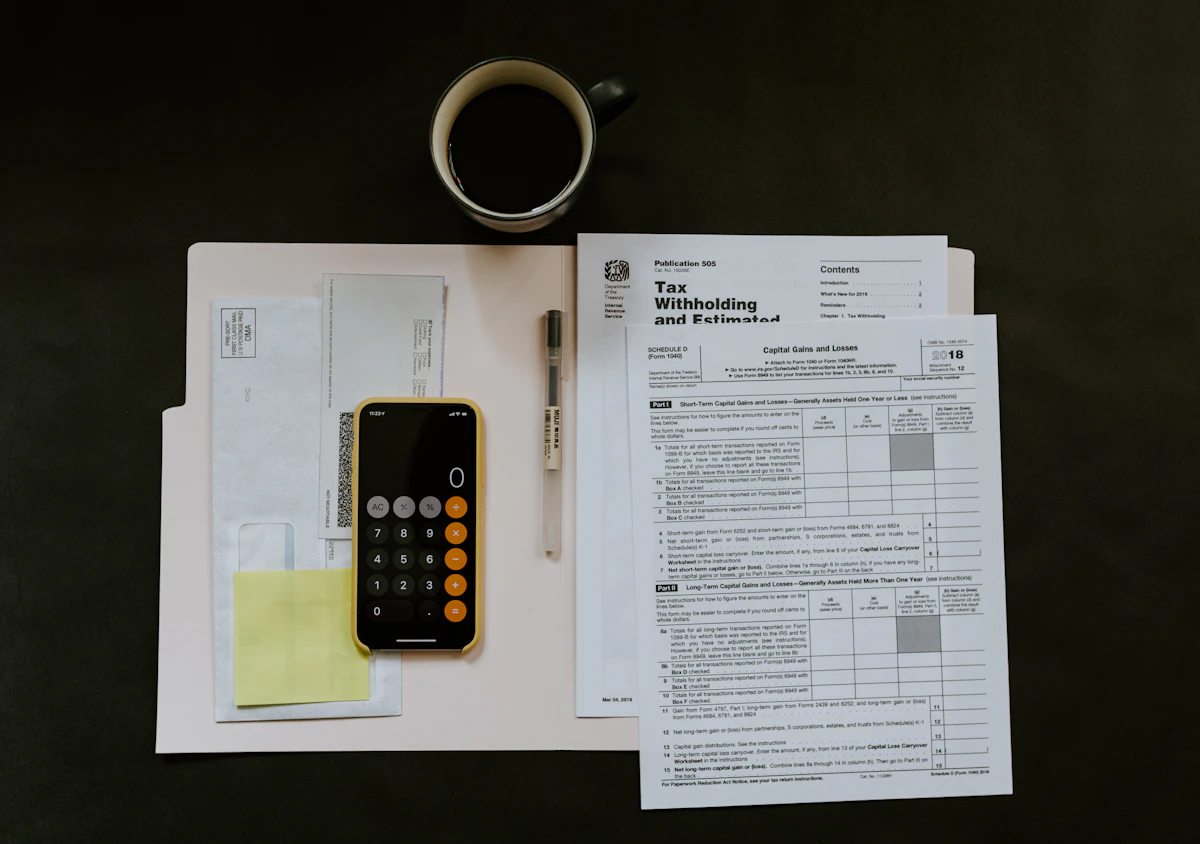
Cash is normally the safest way to invest. You shop for the best interest rate you can get, and sometimes if you fix the term, you can get a slightly higher rate. The tax on Cash is calculated as follows:
- The first R24,800 is normally tax-free, and then the difference is taxed at your average tax rate.
- Many people fix a rate but do not consider the tax on interest.
Money Markets.
Money Markets work the same way as Cash, but the rate can change as rates are shopped around different banks. Sometimes you earn more than the current interest rate from a single bank. Tax works the same way as Cash.
Listed Shares.

Shares can be bought on the stock exchange, either locally or internationally. Shares are bought because they generally perform better over a longer time period than Cash. They are bought at a listed value which, over time, normally increases as the underlying company grows. There are usually two dividend payments per calendar year, so growth is twofold: dividends plus share price growth.
Shares do carry a risk of dropping in value. If you sell below the purchase price, you will effectively get less out than what you originally invested.
Tax on Shares falls under Capital Gains Tax (CGT). As a general indication, CGT works out between 12% and 18% of the capital growth.
As you can see, the tax is almost half that of interest tax. A good blue-chip share will almost always grow above the current interest rate, but not all the time. In short-term investing, Cash can outperform Shares over a three-year period, sometimes longer. One needs patience when investing in this type of structure. This is a multi-billion-dollar industry, and one has to wonder why, if Cash were really the better option.
Investing in Shares should never have less than a three-year horizon.
Unit Trusts.
Unit Trusts are similar to Shares but with more of a safety net, and sometimes they can outperform Shares. A Unit Trust Fund is a basket of different Shares, Cash, Bonds and other investment instruments. You can tailor-make your Unit Trust basket to your risk appetite. The more Cash you have in your basket, the less volatile the fund will perform ("volatile" being how much the value rises or falls over a given period). A good balanced fund can, and often does, outperform Shares and Cash over certain time horizons.
Tax is charged the same as interest (Cash, Bonds and Money Market) plus CGT on the growth of the Share portion. There is no double tax on both interest and CGT. Dividends are also paid and are tax-free. This makes for an attractive investment because Fund Managers make the difficult decisions investing in the markets.
One can pick a Unit Trust to match your risk appetite. A Fund Manager will charge a fee to manage these funds. Normally a good Fund Manager will charge a higher fee. A point to remember: a higher fee does not necessarily mean a lower return. In fact, on many occasions it is just the opposite.
Unit Trusts, like Shares, can be bought and sold with no waiting periods. There is normally an upfront fee and a monthly management fee levied on the value of the funds invested. These are disclosed in the quotes generated by the service supplier and in the Record of Advice.
Endowments.
Endowments are similar to Unit Trusts but structured to be more tax-efficient. Funds can be selected as you do in a Unit Trust, though Endowments normally do not have as many funds to choose from. Some companies only offer a handful of funds. Most do have balanced funds.
The tax advantage: if the investment runs for 5 years or more, there will be no tax for you to pay. Tax is paid at source, usually at a lower rate than a high-tax-paying individual. This includes CGT. So what is paid out, you keep.
Endowments have certain restrictions because of the tax advantage. Once invested (monthly or lump sum) you cannot make a withdrawal in the 1st year. If you do, you could pay a high penalty. Endowments allow for one loan to be paid to you (from your own funds), which you can pay back without incurring fees. You can also do one partial withdrawal in years two, three, four and five. After five years, you can do as many withdrawals as you like or cash in the policy, all tax-free in your hands. Some companies only allow one withdrawal in the 1st 5-year term.
Endowments are more expensive to invest in because of the tax structure and therefore grow slower than Shares or Unit Trusts. They can, however, have a beneficiary listed, which allows funds to be paid to a nominated beneficiary directly. This makes for a good education policy. Endowments can also be ceded as collateral to a bank against a loan.
Retirement Annuities.

Retirement Annuities (RA) are used solely for saving for retirement. They are not short-term investments. Like Endowments and Unit Trusts, investment funds can be chosen. Pre-retirement Annuities may only use "Regulation 28" funds. The funds must be low-risk and approved as a Regulation 28 fund. High-risk funds are not usually allowed.
There are some major advantages to a Retirement Annuity, especially if you are a high earner with a tax rate over 25% of earnings:
- Tax deduction on contributions. If your tax rate is 25% and you contribute R1,000 p/m into an RA, then assuming good standing with SARS, you'll get back approximately R250 of that contribution. That's already a 25% return on investment.
- The Retirement Annuity can be fairly tax-efficient at retirement because some of the cash you can draw (normally a third of capital) is tax-free.
The formula applies to all Pension Funds (Provident, Pension, Preservers and RAs):
- The first R500,000 drawn is taxed at 0%
- The next R200,000 drawn is taxed at 18%
- The next R350,000 drawn is taxed at 27%
- The balance (if any) is taxed at 36%
If your RA is less than R247,000, you can draw the full amount out subject to the above tax tables. If more than R247,000, you may draw a third out and the remaining two-thirds must be used to buy a compulsory annuity.
An RA can be an excellent way to build capital for retirement because you can get a tax break on up to 27% of taxable income (capped at R350,000) per year.
Property Investing.

Property Investing is when an investor buys a property such as a flat, townhouse, house, or a commercial building (factory, warehouse, etc.). This was considered a relatively low-risk investment until the 2008 credit crisis hit, and suddenly property investing took on a whole new meaning. Typically you'd borrow from the bank, buy the property, rent it out, use the rent to pay the bond and normally subsidise the difference between the bond payments and the rental received.
The risks include the following:
- Pirate tenants. People who move in and pay no rent. They can normally stall for a minimum of 6 months to a year before you can evict. Force-eviction breaks the law and attracts very stiff fines.
- You will be responsible for maintenance and upkeep, incurring potential losses of up to 6 months or more rent just to repair after a tenant has moved out (yes, even after keeping the deposit).
- Unable to find a reliable tenant.
- Nett rental is fully taxed.
- Five-year-or-more investment horizon, and non-liquid.
- Properties bought with no bond normally only give between 4% to 6% nett return.
That said, many investors have done very well with property investing.
These are the basic types of investing. There are many more, but they are not as mainstream as those highlighted here. Each type has pros and cons and all carry some risk. Yes, even Cash in the bank, as African Bank and VBS can testify to.